
Disclaimer: This is my personal story. Consult Islamic scholars for ritual accuracy.
Picture this: I’m sitting on a plane, staring out the window at nothing but clouds, my heart pounding like I’m about to jump off a cliff. Not out of fear, but this wild mix of excitement and nervousness. I’d been talking about Umrah for years—always “Insha’Allah next year,” always some excuse like work, kids, or just life being too messy. You know how it goes, right? You tell yourself you’ll get to it when the stars align. But then my mom, with this quiet, fierce look in her eyes, said, “What if we just go? Now?” It wasn’t a question. It was a wake-up call. That moment hit me like a brick—time doesn’t wait, and neither should I.
So, we went. Just four of us: me, my wife, my mom, and my 78-year-old grandmother, the kind of woman who prays Tahajjud like it’s her morning coffee with Allah. No big tour group, no megaphone-wielding guide. Just us—four hearts, each carrying our own hopes, fears, and dreams, chasing something bigger than ourselves. Fourteen days split between Mecca and Medina—seven in each. We did Umrah, prayed in the Rawdah, wandered through every ziyarah spot, laughed until our sides hurt, cried until our faces were a mess, got lost in the crowds, and somehow found ourselves in the shadow of the Kaaba and the serenity of the Prophet’s ﷺ mosque. Oh, and we shopped. Like, a lot. But I’ll get to that.
This isn’t your typical Umrah guide with bullet points and rigid steps. It’s my story, raw and unfiltered, like I’m spilling my heart over coffee at 2 a.m. It’s about faith, family, and those moments that crack you open and put you back together. Maybe it’ll help you plan your trip. Maybe it’ll just remind you why you’ve been dreaming of going. Either way, come along with me.
Why We Went (And Why You Shouldn’t Wait)
I used to think Umrah was just another box to check off the “good Muslim” list. I pray five times a day, give sadaqah, try not to lose my temper when someone cuts me off in traffic—good enough, right? But sitting with my mom that day, her words sinking in, I realized it’s not about “enough.” Umrah is about connection. It’s like hitting reset on your soul, standing in front of Allah’s House and saying, “Here I am. I’m a mess sometimes—distracted, stressed, not always the person I want to be—but I’m here.” That feeling? It’s like coming home after being lost for years.
My grandmother was the real reason we went. She’s 78, with hands that have folded in du’a for decades, carrying stories of her parents who dreamed of Mecca but never made it. She’d tell me those stories when I was a kid, her voice soft but heavy with longing. I could see it in her eyes—she wasn’t just praying for herself; she was praying for all of us, for the ones who came before and the ones yet to come. How could I let her wait any longer? That thought kept me up at night. What if we didn’t have tomorrow?
If you’re reading this and thinking, “I’ll go next year,” I get it. I was you. But life doesn’t pause. Jobs pile up, kids get sick, plans fall apart. Allah says, “Hasten to forgiveness from your Lord” (Surah Al-Imran, 3:133). There’s this urgency in that—not fear, but a nudge to move before it’s too late. You don’t need to be perfect to go. You just need to show up—broken, tired, hopeful. We did. And every step was worth it.
Preparing for Umrah: Heart, Mind, and a Good Pair of Sandals
I thought prepping for Umrah was just booking a flight and tossing some clothes in a bag. Nope. It’s like getting ready for the biggest meeting of your life—with Allah. It’s mental, spiritual, and logistical, and it starts long before you board the plane.
The Visa: We went through a trusted Umrah agency, thanks to my cousin’s friend’s brother who’s been in the game for 20 years. Pro tip: don’t just Google the cheapest package. Check reviews, call them, make sure they’ve got real customer support. We paid a bit more, but it meant no visa headaches, no last-minute scrambles. Worth every penny.
Packing: I’ll be honest—I overpacked. I had this irrational fear of rain in Mecca (spoiler: it’s rare, and when it happens, it feels like a gift from Allah). Here’s what actually mattered:
- Ihram clothes: Two sets each, cotton, breathable. Men need two white, seamless cloths; women need loose, modest attire like an abaya. Skip the cheap ones—get quality from a local Islamic store. You’ll be in these for hours.
- Sandals: Get comfy ones. You’re walking miles—Tawaf, Sa’i, hotel to Haram. My feet still thank me for those cushioned sandals.
- Reusable water bottle: The Haram has Zamzam coolers everywhere. Fill up, stay hydrated. Dehydration sneaks up fast.
- Prayer mat and pocket Quran: We carried compact ones. My grandma clutched hers like a lifeline.
- Snacks: Dates, nuts, energy bars. Tawaf can hit you like a marathon, and low blood sugar is no joke.
- SIM cards: We got STC for Mecca and Mobily for Medina at the airport. Dual-SIM phones saved us for navigation, WhatsApp, and prayer times.
Spiritual Prep: This was the real work. We memorized key du’as, not just to recite them but to feel them. My wife recorded voice notes of the Talbiyah, and my mom repeated them like a mantra. Here’s what we learned:
- Talbiyah: “Labbayk Allahumma Labbayk, Labbayka La Sharika Laka Labbayk. Inna al-Hamda wa al-Ni’mata Laka wa al-Mulk, La Sharika Lak.” It’s like telling Allah, “I’m here, fully Yours.”
- Rabbana atina: “Rabbana atina fid-dunya hasanatan wa fil-akhirati hasanatan wa qina ‘adhaban-nar.” Asking for good in this life and the next, and protection from the Fire.
- At the Kaaba: “Allahumma anta al-Salam, wa minka al-Salam, tabarakta ya Dhal-Jalali wal-Ikram.” It’s a greeting to Allah, the source of all peace.
- During Sa’i: “Allahumma ighfir li, warhamni, wahdini, wa ‘afini, warzuqni.” Begging for forgiveness, mercy, guidance, health, provision.
We practiced on the plane, whispering du’as as the world blurred below. By the time we stood in the Haram, those words weren’t just memorized—they were part of us.
Documents: Your Lifeline
Immigration was a reality check. You need everything, and you need it on you, not buried in a suitcase. We made a folder for each person—physical and digital, saved on our phones. Clear plastic folders, some laminated, always in our bags.
Must-Haves:
- Passport (6+ months validity)
- Umrah visa (printed, digital backup)
- Flight tickets (printed, on phone)
- Hotel bookings (Mecca and Medina)
- Travel insurance (mandatory now)
- Vaccination certificate (meningitis)
- Mahram letter (for women without male guardians)
- Marriage certificate (if traveling with spouse)
- Emergency contacts (embassy, family, agency)
When security asked for my mom’s visa at the Haram, I pulled it out in seconds. No panic, no running back to the hotel. That folder was our MVP.
Apps That Kept Us Sane
WhatsApp calls? Unreliable in Saudi Arabia. We tried, failed, and nearly lost it. Thank God we had backups:
- Nusuk App: Must-have for Rawdah visits. Book three days ahead, or you’re not getting in. It’s that simple.
- Google Maps (Offline): We downloaded Mecca and Medina maps. The Haram’s a maze—GPS fails, but offline maps don’t.
- Careem: Like Uber, but better for Saudi. Perfect for ziyarah trips or late-night food runs.
- Muslim Pro: Prayer times, Qibla, Quran. Never left home without it.
- Telegram/IMO: Worked when WhatsApp didn’t. My wife sent voice notes to her sister every night.
Pro tip: Airplane mode at night, Wi-Fi only. My grandma swore the phone radiation made her feel “heavy” near the Haram.
Day 1 in Mecca: The Kaaba Broke Me
We landed in Jeddah at night, jet-lagged, a little dazed. The drive to Mecca was quiet—my mom whispering, “We’re really here,” my grandma murmuring du’as in the backseat. I was numb, like I couldn’t process it. Then we turned a corner, and there it was: Masjid al-Haram, glowing like a beacon, the Kaaba standing proud in the center, wrapped in its black kiswah.
I broke. Not gentle tears—ugly, chest-heaving sobs. My wife gave me this look like, “Who are you?” But I couldn’t help it. It was like my soul recognized home, like every doubt, every worry, every distraction fell away. I wasn’t a husband, a son, a worker—I was just me, standing before Allah.

We checked into Al Anwaar Al Zaweya (solid view, steps from King Fahd Gate), dropped our bags, changed into ihram, and were at the mosque in an hour. The air was thick with du’a, incense, and the hum of thousands reciting Talbiyah. I felt small, but in the best way—like I was part of something eternal.
Entering Ihram: Bare and Humble
We assumed ihram on the plane—people praying in aisles, changing in tiny bathrooms, a chaotic but beautiful vibe. Ihram strips you down:
- No perfume, hair/nail cutting, arguing, or intimacy.
- Men: Two white, seamless cloths. Women: Loose, modest clothes, face and hands uncovered.
It’s raw. No ego, no status—just you and Allah. We entered through King Fahd Gate, the Talbiyah echoing around us, pulling us closer to the Kaaba.
Tawaf: Circling My Heart Around Allah
Tawaf is seven counterclockwise circuits around the Kaaba. Simple in theory, overwhelming in reality. The crowd pushed against us, the heat pressed in, and my emotions were all over the place. I kept losing my family in the sea of people. But then I’d see my grandmother—hands raised, tears streaming, whispering du’as in Urdu I couldn’t understand but felt in my bones. It kept me going.
What We Did:
- Hajr al-Aswad: Too crowded to kiss, so we pointed and said, “Allahu Akbar.” When we finally got close, my mom kissed it first, then my grandma, my wife, me. It felt like a family milestone.
- Rukn al-Yamani: Touched it each round, no kissing, like a checkpoint of faith.
- Maqam Ibrahim: Prayed two rak’ahs after Tawaf in a packed corner. My wife said it was the most peaceful prayer of her life.
- Zamzam: Drank it, filled our bottles. It’s sweet, cool, like nothing else.
By round four, I hit a wall. My feet ached, my heart felt heavy. Doubts crept in—“You don’t belong here, you’re not good enough.” Satan loves Tawaf. But I remembered the Prophet ﷺ saying Tawaf is like fasting and praying all night. I raised my hands at Rukn al-Yamani and whispered, “Allah, I’m Yours.” By the seventh round, I was crying again—not from pain, but from peace. Like I’d left a piece of my old self behind.
Sa’i: Running for Faith
Sa’i is seven walks between Safa and Marwah, retracing Hajar’s desperate search for water for baby Ismail. It’s air-conditioned now, but it’s still long, crowded, emotional. My grandma struggled, her steps slow. We took breaks, my mom and I holding her arms. She said, “I’m doing this for Hajar. For every mother who runs for her child.”
That broke me. Hajar had nothing—no water, no help, just faith. I thought of my own struggles—work stress, family fights, fears about the future. What’s my excuse? We made du’a at Safa and Marwah, jogged in the green lights, and finished exhausted but full, like we’d tapped into something deeper than ourselves.
Halq/Taqsir: Shedding the Old Me
After Sa’i, men shave (halq) or trim (taqsir) their hair; women trim. I went to the Mataf barber—snip, snip, six weeks of beard gone in 30 seconds. Felt weird, then like I was free. My wife, mom, and grandma trimmed their hair, giggling, “We match now!” Umrah was done. I felt lighter, like I’d let go of ego, stress, the need to be “perfect.”
Ziyarah in Mecca: History in Every Step
Mecca’s ziyarah spots are like pages of Islamic history:
- Mount Arafat: We stood on the plain, imagining millions at Hajj. My mom cried, saying, “This is where we beg for mercy.” I felt tiny, humbled.
- Muzdalifah: Quiet, open, under the stars. We collected pebbles, even though we didn’t need them, just to feel connected.
- Mina: Saw the Jamarat, the tents. Felt the weight of Hajj.
- Jabal Thawr: The cave where the Prophet ﷺ hid during Hijrah. We prayed at the base, du’as echoing in our hearts.
- Cave of Hira: Where revelation began. We didn’t climb—too steep—but stood nearby, reciting Quran. It gave me chills, like touching the start of it all.
Timing Tips:
- Jannat al-Mu’alla: After Maghrib, peaceful for du’a.
- Mount Arafat: Sunrise or sunset for breathtaking views.
- Jabal al-Nur: Dawn only—hot and steep by 9 a.m.
Medina: Where Peace Lives
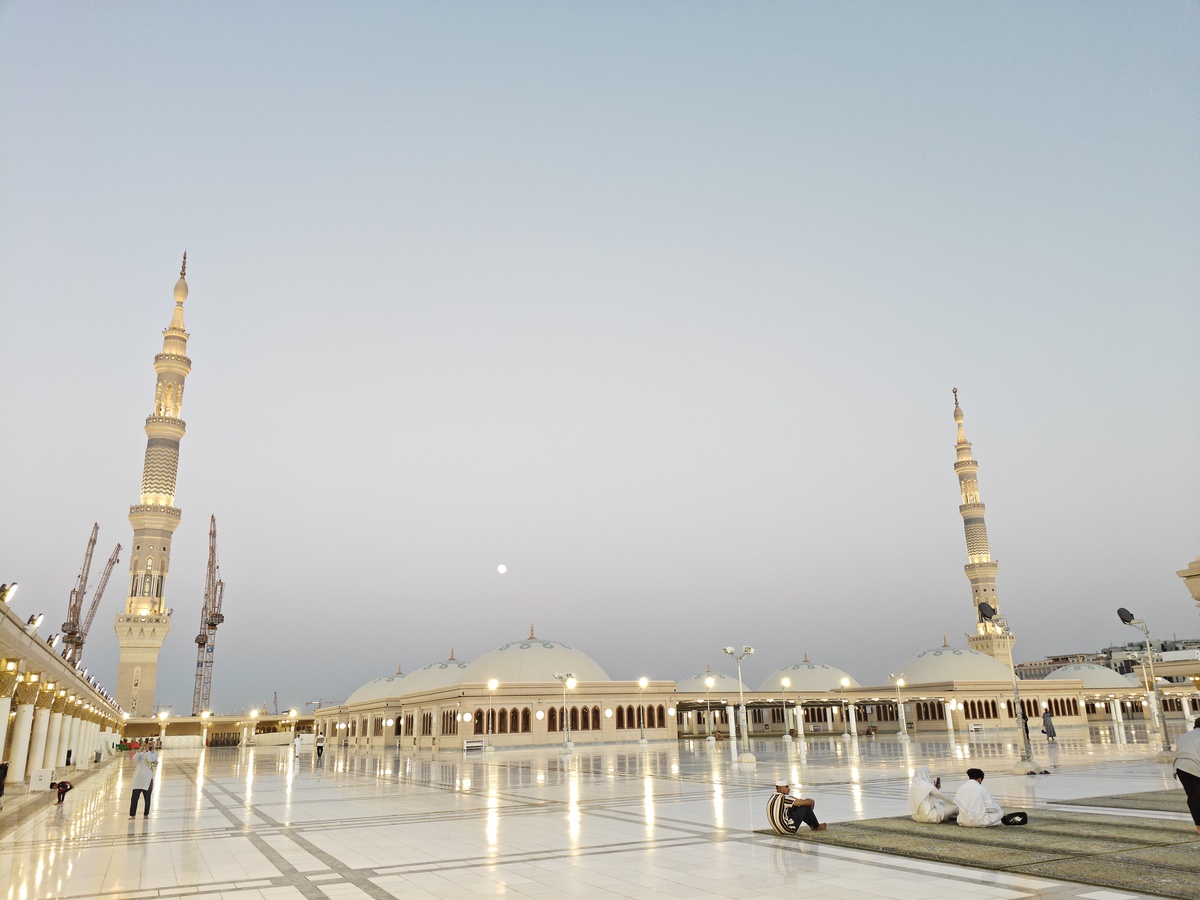
We took the Haramain train to Medina—2 hours, smooth as butter. Medina felt different—softer, greener, like the air was laced with barakah. We stayed at Al Iman Hotel, a short walk from the Prophet’s ﷺ Mosque. We practically lived there—praying in the Rawdah, visiting the Prophet’s ﷺ grave with quiet respect, eating dates under palm trees, sipping laban.
The Rawdah was a dream. We booked our slot via Nusuk, waited patiently, and when we stepped in, it was like breathing light. My wife said her two rak’ahs felt like a conversation with Allah. I felt it too—this stillness, like the world paused.
We shopped like pros: Ajwa dates, silk hijabs, oud from a 40-year-old shop, miswak, camel milk chocolate (tastes like caramel, you’ve got to try it). Food was next-level—mansaf, kabsa, falafel, kunafa. One night, we found a tiny spot serving lamb mandi so good we ate in silence, no phones, just family and gratitude.

Ziyarah in Medina: The Seerah Comes Alive
Medina’s ziyarah spots felt like walking through the Prophet’s ﷺ life:
- Masjid Quba: Prayed at sunrise, like the first mosque in Islam was welcoming us.
- Masjid al-Qiblatain: Where the Qibla changed. Standing there, you feel history shift.
- Jannat al-Baqi: Prayed for the Prophet’s ﷺ family and companions. My mom whispered, “Pray for us, O Mothers of the Believers.”
- Uhud: Touched Hamzah’s (ra) tomb. Felt the weight of sacrifice.
Each place was a living page of the Seerah, pulling us closer to the Prophet ﷺ.
Moments That Stayed With Me
It wasn’t just the rituals. It was the quiet moments that cracked my heart open. Like sitting on the hotel rooftop at 3 a.m. with my wife, the Haram glowing below, her whispering, “I’ve never felt this close to Allah.” Or my mom helping my grandma up the stairs after Taraweeh, my grandma saying, “You’re my Hajra.” Or the four of us, post-Umrah, holding hands in a circle, reciting Surah Ikhlas, not because we had to, but because our hearts wanted to. Those moments weren’t just spiritual—they were us, turning to Allah together.
Was It Worth It?
A thousand times, yes. Was it tiring? Sure. Frustrating at times? You bet. Did I cry more than I ever have in public? Oh, yeah. But seeing my grandmother stand before the Kaaba, whispering, “Alhamdulillah, I made it,” made every ache worth it. Praying Fajr with my wife in the Haram, our shoulders brushing, was worth it. Realizing Allah is closer than my jugular vein—that was everything.
If you’re dreaming of Umrah, don’t wait for the “perfect” time. There’s only now. Planning your trip? Drop a comment or DM me—I’ll tell you the best spot for Ajwa dates or the quickest gate for Tawaf. Labbayk Allahumma Labbayk.
Disclaimer: This is my personal story. Consult Islamic scholars for ritual accuracy.

Leave A Comment