
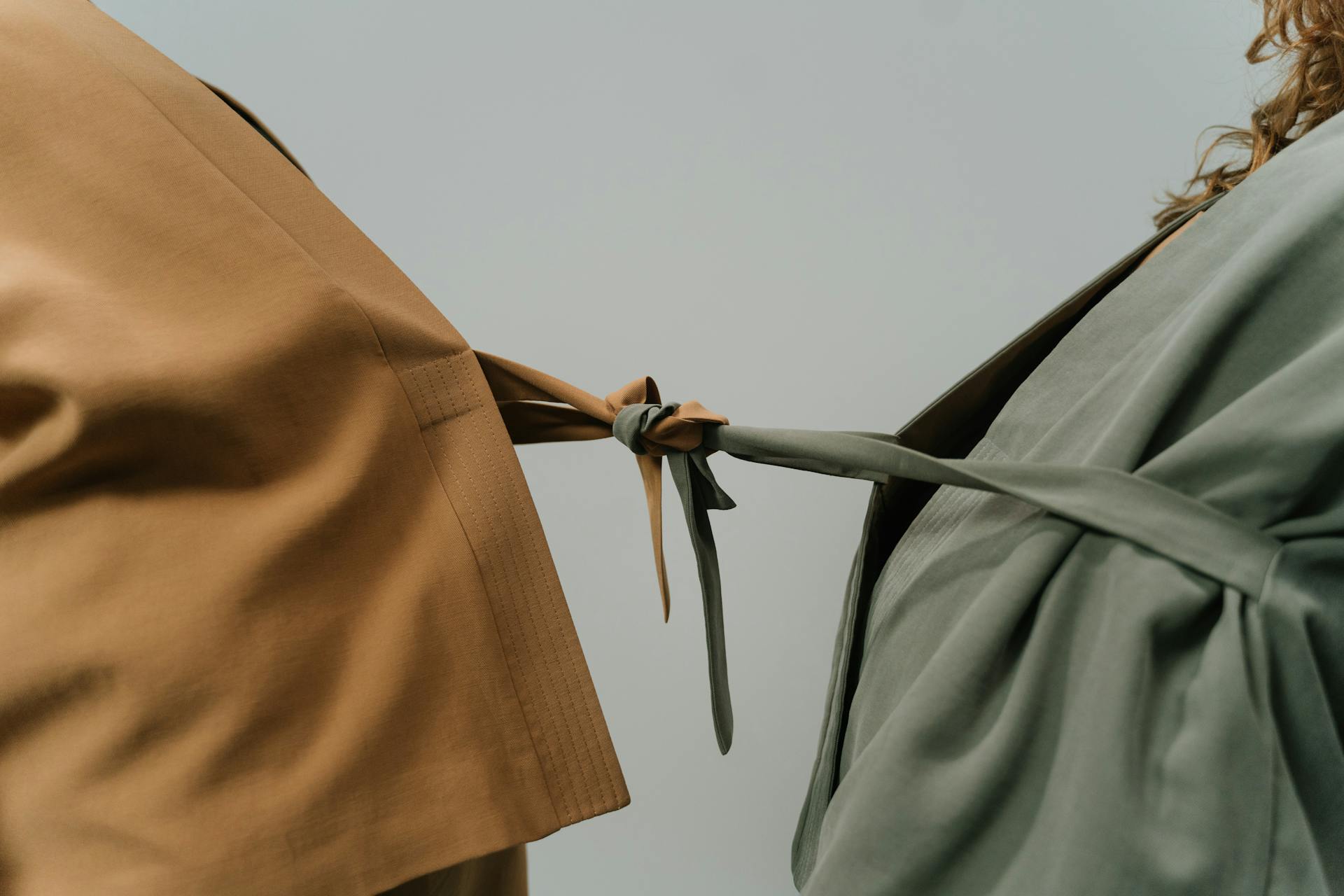
Let me hit you with the truth that nobody wants to say out loud at dinner parties or while scrolling through couple goals on Instagram: most of what we call love is just control in a nicer outfit. Possessiveness isn’t some cute side effect of caring too much. It’s the main course. And the scary part? We don’t even notice we’re ordering it.
I’ve sat across from enough friends at 2 a.m. coffee runs, watched enough late-night texts light up their faces with that mix of relief and dread, to know this isn’t theory. It’s the water we’re all swimming in. Someone says “I miss you” and it lands sweet for about three seconds—until the next message rolls in: “Where are you? Who’s there with you?” That shift from ache to interrogation? That’s not love talking. That’s ownership checking its property.
Think about the last time you heard a friend describe their “ride or die” relationship. They’ll paint it like a romance novel: “He gets so jealous, it’s kinda hot.” Or “She wants to know everything about my day—it makes me feel wanted.” Bullshit. What they’re really describing is a leash that feels like an embrace because we’ve confused the two our whole lives. I did it too, back when I was twenty-four and convinced that the girl who hated me talking to my female coworkers was just “passionate.” Turns out passion doesn’t come with rules about whose names can appear in your phone notifications. Real passion doesn’t need a permission slip.
We romanticize the hell out of it, though. Movies sold us the idea that the guy who punches a wall because another man looked at you is the hero. Songs croon about “you belong to me” like that’s the ultimate declaration instead of a red flag with a melody. Social media made it worse—now it’s public. Stories disappear if they don’t include your partner. Likes get dissected like evidence in a trial. I watched a buddy lose his mind last year because his girlfriend posted a throwback photo with an old college friend. Not a new guy. A picture from 2018. He spiraled for days, convinced it meant something. She deleted it to “keep the peace.” That’s not love keeping the peace. That’s control winning another round.
Here’s where it gets uncomfortable: we don’t want love because love is terrifying. Love says, “Go live your life, and I’ll still choose you every day even if it doesn’t include me in every frame.” Control says, “Stay in the frame or I’ll lose my mind.” One requires trust. The other only requires passwords and location sharing. And most of us—hell, almost all of us—pick the second because trust feels like standing on the edge of a cliff with no harness. Control feels like solid ground, even if that ground is actually a cage we built together.
I remember the exact moment I saw it clearly in my own life. I was with someone who used to joke that my weekends without her felt like “abandonment.” Cute at first. Then it wasn’t. Every plan I made with friends came with a side of guilt trips so subtle you’d think they were accidental. “Have fun… I guess I’ll just stay in.” The subtext was never love. It was fear dressed as devotion. When I finally called it out—gently, because that’s what you do when you still think you’re in love—she cried and said, “I just care so much.” No. You just need to feel safe by making sure I can’t escape the version of me you built in your head.
That’s the aggressive part nobody wants to hear: if your version of love requires the other person to shrink so you can feel big, it was never love. It was possession. And possession is lazy. It’s easier than doing the work of becoming someone who can handle another human being having a full, messy, independent life. Easier than sitting with the discomfort that they might choose something else tomorrow and you’d have to survive it. Easier than admitting that real love might end and you’d still be okay.
Look around. The evidence is everywhere. The guy who “loves” his girlfriend so much he checks her Instagram follows every night. The woman who “adores” her husband but throws a fit if he grabs a beer with coworkers without texting updates. The parents who call it “protectiveness” when they police their adult kid’s dating life. It’s all the same disease wearing different clothes. We say “I can’t live without you” when what we really mean is “I can’t control my own anxiety unless I control you.”
And the craziest part? We defend it like it’s sacred. I’ve had arguments with people who swear up and down that jealousy is proof of depth. “If you don’t get jealous, you don’t care.” Nah. If you don’t get jealous, you’ve done the terrifying work of actually loving someone instead of needing them to fill the holes in you. Jealousy isn’t passion; it’s insecurity with better marketing. I’ve felt it myself—that hot spike in the chest when someone you’re seeing laughs too long at another person’s joke. In the moment it feels romantic, like your heart is fighting for what’s yours. Later, when you’re honest, you realize it was just your ego throwing a tantrum because someone reminded you that you don’t own a damn thing.
We’ve built entire cultures around this lie. Arranged marriages in some places, “traditional values” in others—all of it cloaked in duty and honor but really just control passed down like heirloom china. Even in the so-called progressive West, we’ve swapped rings and vows for digital chains: shared locations, joint accounts used as leverage, “we” language that erases the “I.” I dated a woman once who introduced me to her friends as “my person” within three weeks. Sounded poetic. Felt like a collar. Six months later she was using that same phrase while explaining why I couldn’t go on a work trip without her approval. Love doesn’t need approval. Control does.
The aggressive truth is this: most people entering relationships aren’t looking for a partner. They’re looking for a solution to their loneliness, their fear of being ordinary, their terror of dying alone. They want someone who will make them feel chosen every single second so the void doesn’t whisper too loud. That’s not partnership. That’s emotional real estate. And once they’ve staked their claim, God help you if you try to redecorate or—worse—move out.
I’ve seen the fallout in real time. Friends who stayed “for the kids” but really stayed because letting go meant admitting they never had control to begin with. Exes who turned into stalkers the second the relationship ended—not because they loved too hard, but because their identity was built on owning someone else’s time and attention. The common thread? They never wanted the person. They wanted the power to decide the person’s story.

And before you think this is just me being cynical, let me own my part. I’ve been the controller too. In my early twenties I once went through a partner’s phone while she slept because “something felt off.” Nothing was off. I was just scared she might see something better and leave. That night I realized the sickest part: I wasn’t protecting our love. I was protecting my illusion that I could keep her. The second I admitted that to myself, something cracked open. Because once you see possessiveness for what it is—cheap fear in expensive wrapping—you can’t unsee it. You start noticing it in every couple at the bar, every “couple goals” post, every whispered “where were you?” that lands like a velvet hammer.
This isn’t rare. This is the default setting for most relationships I’ve witnessed. The ones that last decades? A shocking number of them are just two people who got really good at the control dance—picking battles, keeping score quietly, trading freedoms like currency. The ones that feel electric at the beginning? Often the most controlling underneath, because the intensity was never chemistry. It was two terrified people grabbing onto each other so hard neither could run.
We lie to ourselves constantly. “It’s just because I love you so much.” Translation: “It’s because the idea of you existing without my input makes my stomach drop.” Love doesn’t make your stomach drop. Control does. Love feels like standing on solid ground together, even if one of you wanders off to explore. Control feels like the ground shaking the second one of you takes a step.
I keep coming back to this one memory that won’t let me go. A close friend—let’s call her Maya—had been with her boyfriend for four years. They lived together, talked about marriage, the whole thing. He was the jealous type, but she framed it as “he just cares deeply.” One weekend she went to her sister’s bachelorette party. No strippers, just wine and dancing and zero guys. She came home at 2 a.m. glowing. He was waiting up. Not because he missed her. Because he needed the play-by-play of every hour she was gone. When she laughed it off, he got quiet in that way that’s louder than yelling. Two days later he “accidentally” left his location on her phone so she could “see he was thinking of her.” She told me later she felt a chill she couldn’t explain. That chill? That was her body finally admitting what her heart had been ignoring: she wasn’t loved. She was monitored.
Maya left six months after that. Not because of one incident, but because she finally saw the pattern for what it was—a thousand small controls adding up to one big cage. The last thing he said to her? “I only did it because I loved you too much to lose you.” Classic. The people who love you don’t need to trap you to keep you.
That’s the part that stings the most. We’ve convinced ourselves that real love looks like sacrifice—your freedom for my peace of mind. But sacrifice without consent is just control with better PR. And the second you start requiring someone to sacrifice their autonomy to prove their love, you’ve stopped loving them. You’ve started collecting them.
I’m not saying jealousy never happens in healthy relationships. Of course it does. We’re human. But there’s a canyon-wide difference between feeling a pang and acting on it by restricting someone else’s life. One is an emotion you manage like an adult. The other is emotional terrorism wearing a heart emoji.
The aggressive reality is this: if your love comes with conditions, fine print, curfews, or emotional audits, it’s not love. It’s a contract. And contracts are about control, not connection. Most people want the contract because it feels safer than the freefall of actual intimacy. Actual intimacy says, “I see all of you—the parts that don’t revolve around me—and I still choose you.” Control says, “I see all of you and I’m going to edit the parts that scare me.”
We’re all guilty of wanting the edited version sometimes. I’ve caught myself doing it in friendships, in family, even in the way I’ve loved. The pull is strong because it’s wired into us—survival stuff from way back when losing your tribe meant death. But we’re not in tribes anymore. We’re in 2026 with therapy apps and self-help podcasts, still acting like our partner’s lunch with a coworker is a threat to the village.
So yeah. Most people don’t want love. They want the feeling of control that love promises but never actually delivers if it’s real. They want the certainty, the predictability, the power to say “you’re mine” and have the world nod along like that’s beautiful instead of barbaric.
And the wildest part? Deep down, I think we all know it. We feel the difference in our bones when someone loves us without clutching. It’s rare as hell, but when it happens it feels like oxygen after years underwater. Light. Spacious. A little scary in how good it is.
But recognizing the problem is only step one. The real question—the one that keeps me up at night—is what the hell we do about it. Because seeing the cage is one thing. Walking out of it without burning the whole relationship down? That’s where it gets messy, beautiful, and actually possible.
We’ll get there. But first, we had to call the lie what it is.
No sugarcoating. No excuses. Just the raw truth most of us have been swallowing for years.
So we’ve ripped the bandage off. Most of what passes for love is really just control wearing lipstick and holding hands. We’ve seen it in our own lives, in our friends’ late-night meltdowns, in the quiet ways people start disappearing into each other until one of them can’t breathe anymore. The diagnosis is brutal and clear.
Now comes the part everyone hates even more: actually doing something different.
Because knowing the cage exists doesn’t magically dissolve the bars. You don’t wake up one Tuesday and suddenly stop craving the safety of ownership. That craving is old. It’s childhood-shaped, it’s society-reinforced, it’s wired into the nervous system like a bad habit you’ve practiced for decades. Undoing it feels less like growth and more like learning to walk again after someone cut the strings you didn’t even know were there.
The first realistic thing I had to accept is this: you can’t fix someone else’s control issues. Ever. Not by explaining, not by being the perfect partner, not by proving you’re trustworthy enough to be set free. If they’re using you as a tranquilliser for their anxiety, no amount of good behaviour will cure the anxiety. They have to want the cure more than they want the drug. And most people don’t. Not at first. Not until the cost of keeping the cage becomes higher than the cost of risking the open air.
So step one, brutally practical: stop trying to convince. Stop debating whether jealousy is “normal” or whether checking phones is “understandable.” Those conversations are traps. They keep you inside the dynamic, negotiating the size of the cage instead of questioning whether there should be one. When someone says “I just need reassurance,” the adult response isn’t to provide endless reassurance. It’s to say, quietly and firmly, “Reassurance is temporary. Trust is permanent. Which one are we actually building here?”
That sentence alone can end relationships. And sometimes it should.
The second thing that actually moved the needle for me—and I’ve watched it move the needle for a handful of friends who were brave enough to try—was learning to sit in my own discomfort without outsourcing it. This is the unsexy core of the whole thing. Every time that spike of jealousy or fear hit, instead of texting “where are you” or making a passive-aggressive comment about their weekend plans, I forced myself to feel the feeling all the way through. No distractions. No alcohol. No scrolling. Just me and the ugly little voice saying, “If they leave, you’ll die.” I’d sit with that voice until it ran out of breath. Turns out it always runs out of breath eventually. It’s loud, but it’s not infinite.
That practice—sitting with abandonment terror without acting on it—turned out to be the single most liberating thing I’ve ever done in relationships. Not because it made the fear disappear (it doesn’t), but because it stopped me from making someone else responsible for managing it. Once you stop handing your panic to your partner like a screaming baby, something wild happens: they stop feeling like a warden. They start feeling like… a person again. And weirdly, so do you.
I remember the first time I did it on purpose. I was seeing someone new-ish, maybe three months in. She went to a work thing that involved drinks and dancing and guys I didn’t know. Old me would’ve sent the classic “have fun but not too much fun” text, then spent the night refreshing her stories like a junkie. That night I didn’t. I turned my phone face-down, put on some music I actually liked, and let the panic roll through me like nausea. It peaked hard around 11:30 p.m.—heart racing, mind inventing worst-case scenarios. I breathed through it the way people tell you to breathe through contractions (never been in labour, but I imagine it’s similar). By 1 a.m. the wave had crested and I was just… tired. Not fixed. Not zen. Just tired of fighting a battle I was never going to win by controlling her location.
She texted me the next morning: “Last night was fun. Miss you.” No interrogation needed. No proof demanded. And for once I didn’t feel like I’d earned that text through surveillance. It just arrived because she wanted to send it. That tiny moment felt more intimate than any “I love you” forced out of fear ever had.
That’s the realistic solution in a nutshell: you have to stop using the other person as emotional life support. Not because it’s noble. Because it’s the only way either of you gets to experience anything resembling real love instead of sophisticated hostage negotiation.
Here are the unglamorous, day-to-day moves that actually work (no manifesting, no vision boards, just behaviour change):
- When the urge to check arrives—phone, location, likes, whatever—delay it by ten minutes. Then twenty. Then an hour. Build the tolerance like you’re training a muscle. Every time you succeed, the next urge is a little weaker.
- Replace “where are you” with curiosity that doesn’t demand coordinates. “How was the night?” instead of “Who all was there?” One invites a story. The other demands an inventory.
- Start saying the scary sentence out loud, even when your throat closes: “I feel jealous/scared/insecure right now, and that’s mine to handle. You don’t have to fix it.” Saying it once feels like jumping off a building. Saying it ten times starts to feel like telling the truth.
- Build a life outside the relationship that actually matters to you. Not performative independence, but real stakes. A project, friends you see without your partner, a hobby that doesn’t include them. The more you have that’s yours, the less terrifying it is when someone else has something that’s theirs.
- Stop scorekeeping. The second you catch yourself thinking “I let them do X so they should let me do Y,” you’re back in contract mode. Real love doesn’t keep a ledger.
- When it gets bad—really bad, crying-in-the-bathroom bad—get help that isn’t your partner. Therapist, friend who won’t just co-sign your fear, even a journal if that’s all you’ve got. Externalise the panic instead of dumping it on the person you claim to love.
None of this is easy. Most days it feels like walking uphill in sand. But every time you choose the discomfort of self-soothing over the quick fix of control, something shifts. The relationship stops feeling like a lifeboat and starts feeling like two separate people choosing to swim side by side.

And here’s the part that still surprises me: when you stop trying to lock someone down, they usually don’t run. Not the ones who were ever going to stay anyway. The ones who leave? They were already halfway out the door; you just stopped pretending the lock would hold them. The ones who stay do it because they want to, not because they have to. That difference is everything. It turns “I can’t lose you” into “I’m glad you’re here.” One is desperation. The other is gratitude.
I’ve watched this play out in real time with people close to me. One friend finally stopped demanding daily proof of love from his girlfriend. Instead he started going to therapy for the abandonment stuff he’d carried since his parents’ divorce. Six months later she told him, “I feel like I can breathe around you for the first time.” They’re still together. Not because he controls better now. Because he controls less.
Another friend—the one who used to joke about being “crazy jealous”—realised the jealousy wasn’t about her boyfriend; it was about the version of herself she was terrified of becoming (the one nobody chose). She started painting again, something she’d dropped when they moved in together. The more she painted, the less she needed him to prove she was worthy. He didn’t leave. He started showing up to her exhibitions, proud instead of threatened.
These aren’t fairy-tale endings. They’re just endings where two adults decided the risk of real intimacy was worth more than the comfort of possession.
The realistic bottom line is simple and merciless: if you want actual love instead of dressed-up control, you have to be willing to lose it. Every day. You have to wake up knowing it could end today—not because of something you did wrong, but because people are free. And you have to keep choosing each other anyway.
That’s the only version of love that doesn’t eventually choke both people involved.
It’s terrifying. It’s also the only thing that ever felt like home to me.
Not a cage. Not a contract.
Just two people, scared as hell, choosing each other without handcuffs.
Worth the work.
Every damn time.

Leave A Comment